

The Post Boston Road
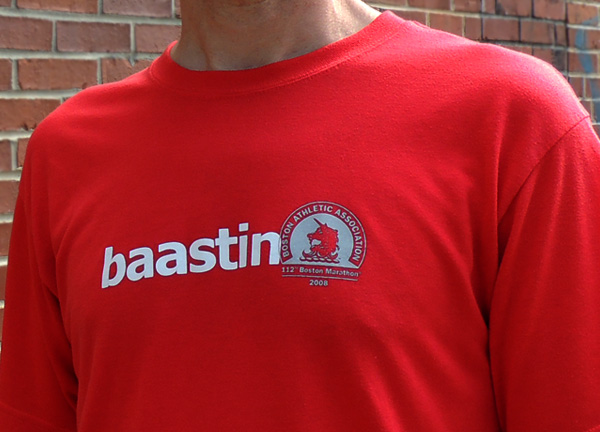
As I drove my ten year old son, Roan, to school on the morning of April 16th, 2013, he asked, “Why would some one want to blow [the Boston Marathon] up?†I responded, “They didn’t want to blow anything up. They just wanted to hurt as many people as possible.â€
“Why?†he asked.
“I don’t know.†I said.
More mundane topics usually occupy the daily ride to school. I don’t usually tackle the problem of evil before 7:30am. And certainly, I can’t offer a suitably reasoned answer in under eight minutes, at least I can’t do it as beautifully as Fred Rogers or Bill Watterson.
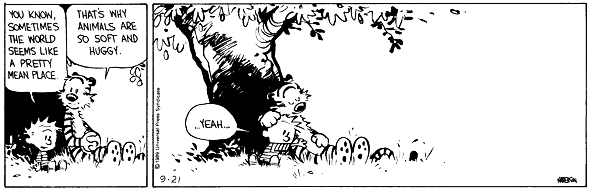
There’s no use shielding young minds. Children see the world quite well, thank you. They can recognize evil. It perplexes them as it does us. One doesn’t have to be familiar with the theodicies of Augustine or Aquinas to wonder at human suffering.
This much is certain: Bad things happen. Good people pay the price. In the aftermath, we’re left to make sense of it all.
As a people, as Americans, we share communal grief, sadness and outrage (How odd that tragedy and misery unite us). Runners lend a specific, nuanced perspective. The epicenter of our subculture has been desecrated. More than a race, the Boston Marathon is a sacred institution. It represents the elusive, ethereal goal of runners all over the world. We bend our minds and bodies in a quasi religious quest to run Boston, to achieve nirvana. Even those who may never participate implicitly view this race as set apart from all others. It’s one thing to run a marathon. It is quite another to run Boston.
Our Mecca has been attacked. Copley square is our St. Peter’s square; our fellow runners, the collective brahman. Our exodus begins in Hopkinton. The finish line, now a scene of murderous atrocity, is our promised land.
Of course, for all we know, those responsible know nothing of this special status beyond the fact that the marathon is a highly public event of significance. A prime target of opportunity, if you want to kill and maim people.
The raw, unspeakable carnage pointedly kindles the runner’s anger in another, deeply personal way. The bombs ripped through spectators. When speaking of the Boston experience, runners inevitably spend most of their time waxing nostalgic about the astonishingly inspiring people bracketing the roads from start to finish. Fans, loved ones, students, residents and children pour energy into runners in a way different from every other race. There is nothing quite like it. The raucous, runner-focused encouragement is tangibly exhilarating for 26.2 miles. On heartbreak hill, the support is something that must be experienced to be believed.
These are not merely fans. They are kin. On race day, they are as much our family as our spouses, children and relatives who line the course. When something happens to these people, no matter how anonymous, it cuts deeply. I can’t bear to write words about those who were severely wounded or lost. I know this: The marathoners they came to see are devastated.
Runners have a slight inkling of this pain for another uncomfortable reason. We sacrifice more than our own time when we train for the marathon. Our obsession exacts a toll paid by those closest to us. Our families patiently endure as we train endlessly. They understand when we are too tired to be our normally chipper selves after a long run. And that’s the thing. We understand, deep down, that our pursuit is largely selfish. This may partly explain the lengths runners go to to raise prodigious amounts of money for charity. The truth is, we are often awash in guilt.
We bring our families to races. They support us, love us, follow us, cheer for us. On Monday, these same people died or were irrevocably harmed while expressing this love; a love so true we probably will never understand it. This makes the bastard scum bombers even more damnable, if such a thing were possible.
Emerson once said, “Every evil [has] its good.†Easily quoted. Easily typed. But he was not one to cast about trite utterances. Eminently thoughtful, Emerson may have referred to the confusing grayness of life, but in these words I see the inability of evil to fully thwart the light. We’ve already seen the spark in Boston’s aftermath. Everyday heroes (decent people who choose to act) leapt immediately into action. Runners, volunteers, spectators, business people, authorities and local residents mobilized into an impromptu army of compassion across downtown Boston and beyond. We still see this extraordinary outpouring in volunteerism, donations and in solemn vigils of solidarity and grief. We see it in proclamations of glorious defiance.
Mr. Rogers was profoundly correct (as I imagine he was about most things). One need not look far to find the helpers, the noble among us. We must look to the good that, in some small way today, and in a larger sense as time passes, dispels shadow.
Let’s dispense with the philosophical and theological conundrums for a time and recognize that we can solve the problem of evil with our hands, feet, hearts and resources. Beyond appreciation for a resilient city, we have a higher calling. We owe it to our fellow runners to support their families after this tragedy. Our mutual connection demands it. If running has given us anything, if our faith means anything, as decent people we must continue to act.
If we can’t banish evil we can bathe it in light and diminish its influence.
As a runner, I will do what all marathoners do. I will keep moving forward. I will qualify for Boston again and will tow the line in Hopkinton once more. With joy, I will stand in solidarity with fellow runners and loved ones celebrating community, life and victory.
I hope to see many of you there. With love in our hearts, seasoned with a dash of defiance, we will move forward together along the storied roads that lead to the city, one footfall, after another, after another.
April 18th, 2013 at 12:57 pm
Well said, Dean, well said.
April 18th, 2013 at 3:33 pm
Brilliantly written, Dean. I cannot contain my goosebumps while reading.
April 19th, 2013 at 7:53 am
Awesome! Boston 2014 is on!!!
April 19th, 2013 at 8:28 am
Thank you Dean. You are truly elegant in your writing. I am sure many, if not all, of us will heed your calling and keep moving forward.
April 19th, 2013 at 12:37 pm
Thanks Dean! I will never forget the kind gesture of yours at Wellsley College when you ran your 1st Boston marathon that eluded me by seconds when I tried to qualify in Feb. 1984! Thank you for putting into words what so many of us feel in our hearts and souls.
April 19th, 2013 at 12:40 pm
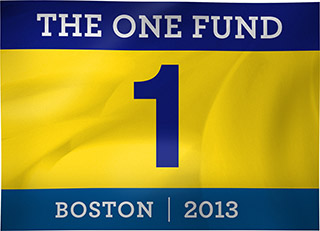
Dean, you’re right on target on all of this. As a Boston runner this year, I find myself grieving for the Boston Marathon itself and for the innocent victims who came to share in our joy, and for the city which so welcomes us. We will be donating to The One Fund.
April 19th, 2013 at 5:53 pm
Brilliantly said, Dean! Thanks for putting the thoughts of so many into words.